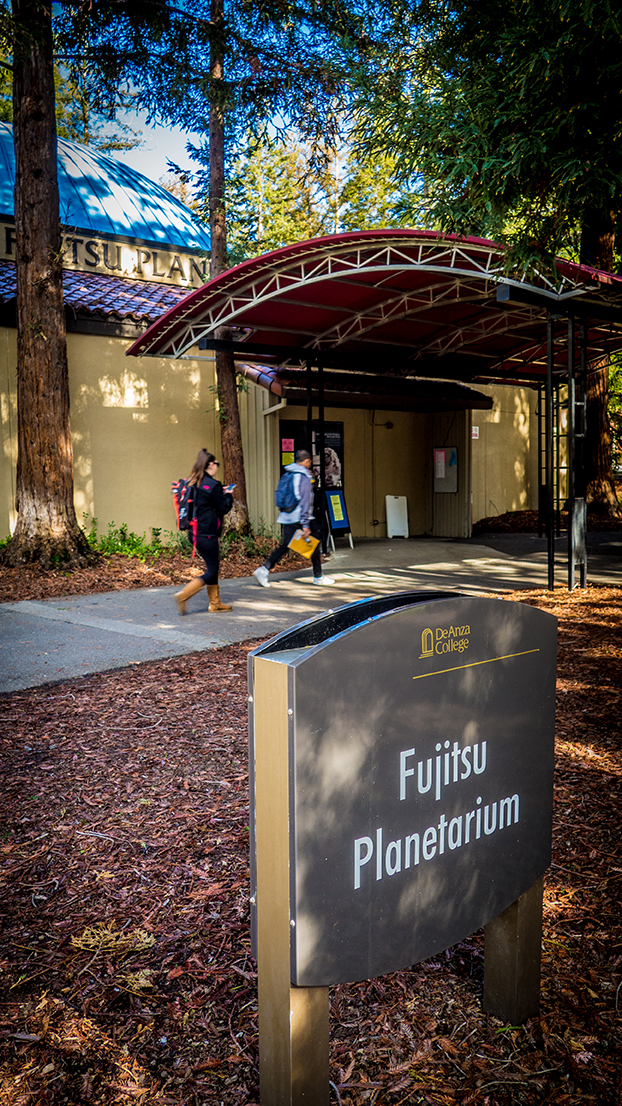
The Fujitsu Planetarium at De Anza College is the largest school Planetarium west of the Rocky Mountains and since our recent renovation, the Fujitsu Planetarium is one of the most modern Planetariums in the world.
The Planetarium is shared by the College Astronomy and Community Education Departments. When used as a classroom, it serves over 2700 college students per year. The Astronomy program at De Anza is the largest in the California State Community College System.
Community Education oversees the school field trips to the planetarium and weekend public shows as well as many special events. About 30,000 community members, including students from
pre-school through high school, attend these shows and events every year.
Ways to donate...
Contact:
Caron Blinick
blinickcaron@deanza.edu
(408) 864-8280
or
Robin Latta-Lyssenko
lyssenko@fhda.edu
(650) 949-6233
With the state budget cutbacks, some schools currently lack any funds to provide this amazing experience. Without your sponsorship, K-8 students from Title I (economically disadvantaged) schools will not be able to attend planetarium astronomy field trips.
We hope you will consider sponsoring a student, group of students or a class to come to the Planetarium this year.
Sponsor one student for $5.00
10 students for $50.00
A class of 30 for $150.00
Fill the Planetarium for $700
A very substantial thank you to the following for their financial support and underwriting of this Title 1 Schools Field Trip Project:
Lockheed Martin
Leo M. Shortino Family Foundation
$400 per seat
One plaque per seat
Three lines of text
18 characters per line, including punctuation and spaces.
A representative from the Planetarium will send you an email asking for the inscription to be inscribed on the plaque after the Foundation has received payment.
Recent state-of-the-art technology upgrades allow the Fujitsu Planetarium to present astronomical imagery and concepts superior to anything previously possible.
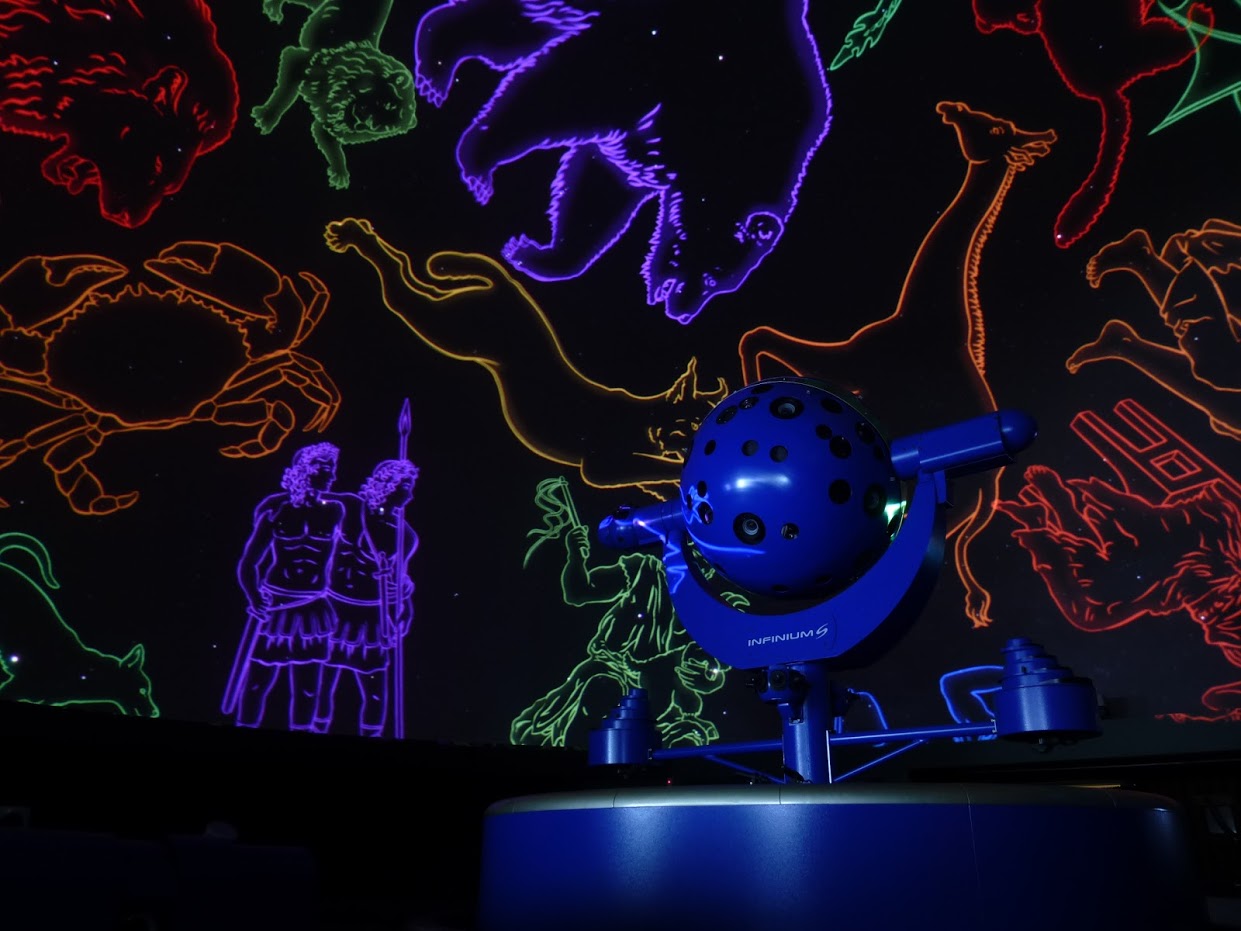
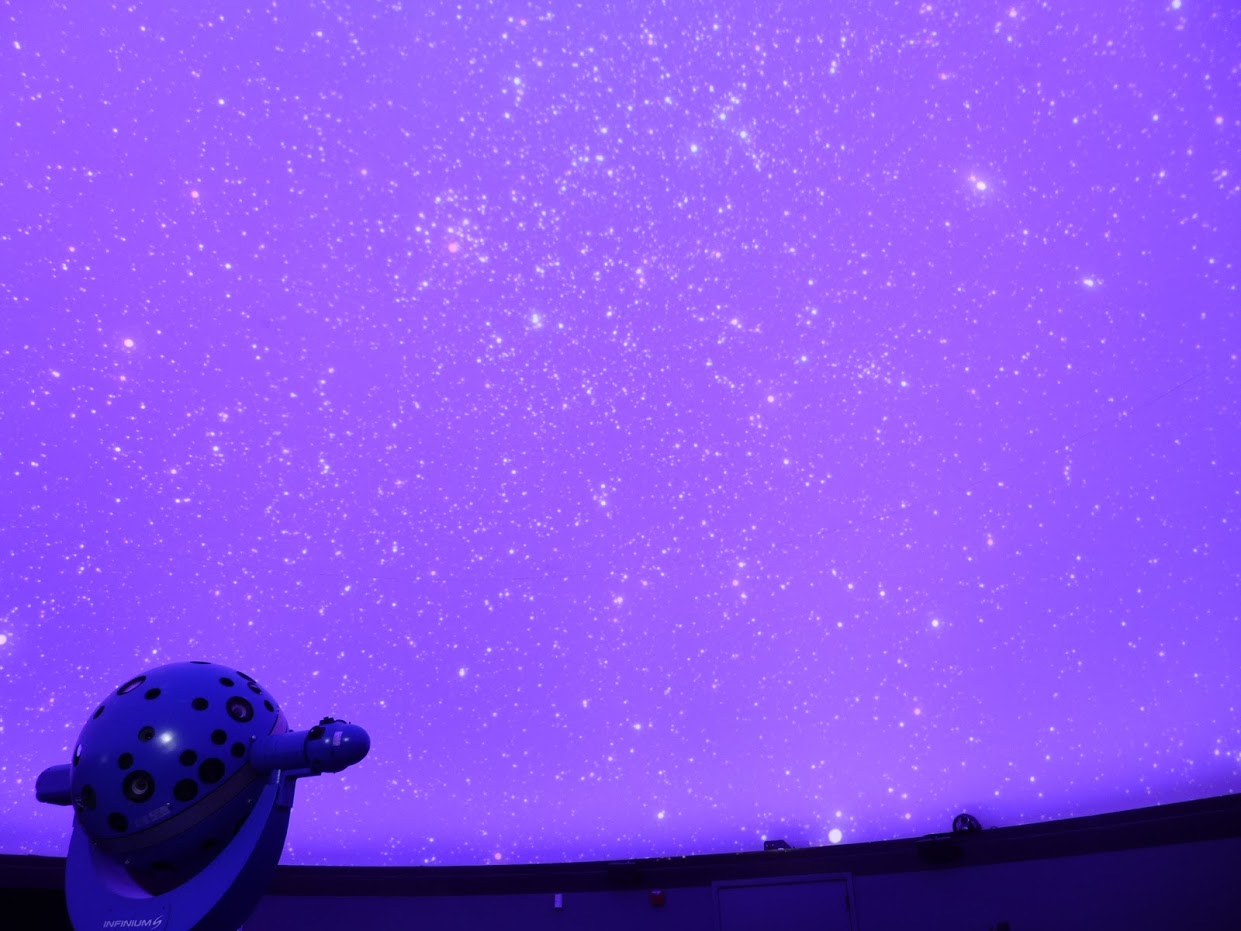
For displaying the night sky with unbelievable clarity and beauty, the Konica-Minolta Infinium S® opto-mechanical star projector uses state-of-the-art fiber optics, laser cut star plates, diffraction-limited lenses and computer positioning to display an incredibly realistic night sky on the dome of the planetarium. You can hear the "Oohs and Aahs" as the sky turns dark and the stars come out. Our Infinium is the first machine of its kind in the Western hemisphere.
We use the Sky-Skan Definiti® system to present pre rendered planetarium programs and to navigate our audience through the immensity of the Universe. The system uses a combination of super computer generated data (which is constantly updated), stunning graphics and awesome full-dome immersive visualization. Highly accurate Sony 4k digital projectors and impressive 6.1 12,000 watt surround sound fill the dome with sound and images that challenge the imagination and spark the viewer's curiosity.
Our Astro Tec® Ultimate Seam dome allows for images to be projected onto a surface that appears seamless across the full panorama of the dome.
The East Coast Control Systems® Pleiades cove light system illuminates the dome with pure color light from LEDs that are environmentally friendly as well as having the flexibility to create various atmospheres inside the dome.
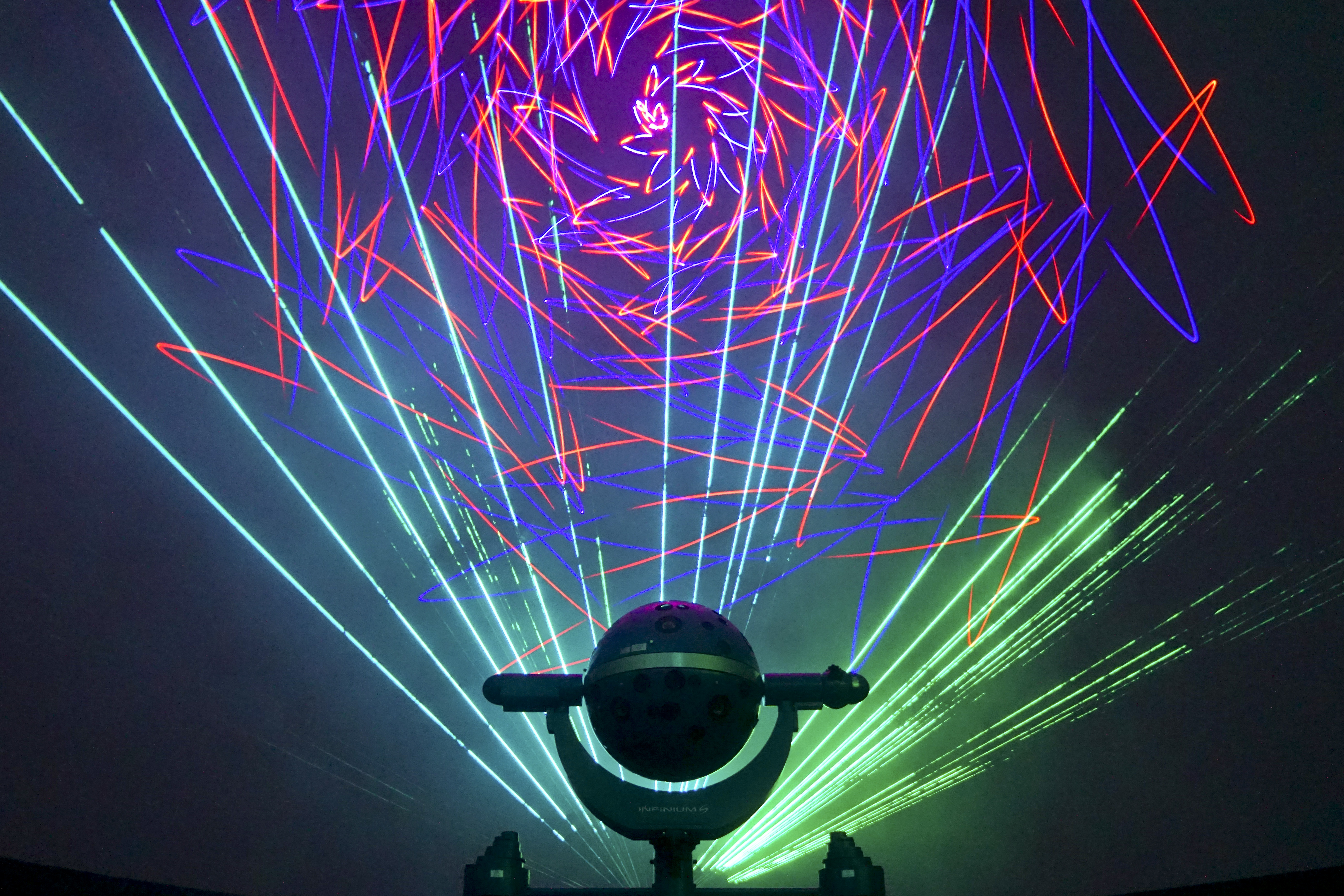
For our Laser Light shows we use a 5 watt Coherent® water cooled, yellow enhanced Pure Light® laser. The colors and imagery are amazing. No two laser shows are alike due to the real time manipulation done by our Laserists.
Also, our new seats are comfortable and well designed to provide maximum viewing capability for our audience.
To complete the experience, a visit to our gift shop will provide the perfect chance to pick up a souvenir or that perfect gift for the budding astronaut or astronomer in your family.
Planetarium Frequently Asked Questions
What is a planetarium? Originally the term “planetarium” was applied to what we now call an Orrery, which is a mechanical representation of the solar system. More recently the term “Planetarium” is used to describe the star projector, then the room in which the stars are projected and to the entire building where the “star theater” is located.
When is the planetarium open? Public programs take place on Saturday evenings from late September through mid March. Group programs take place in the late morning during most of the week and on Friday afternoons. Check the schedule on our web site.
Why can’t I come to the planetarium during the week? Or on Sundays? The planetarium is a school planetarium not associated with a Science Center or Museum. Because the planetarium is shared with the College Astronomy Department, the available times for public events are limited.
Why do you only have public shows from September to March? Since the planetarium is part of the Community Education department, it only offers Saturday public programs during the Fall and Winter quarters each year. The planetarium is still open to private rentals and school/group field trips.
What are Laser shows? How are they different from Star shows? Laser shows are purely entertainment based using beautiful, colorful laser projected imagery in synch with selected music. They are very different from astronomy or star shows, which have the goal of educating as well as entertaining.
How long are the Star shows?
Our shows vary in length. The pre-rendered part of the show is 25 to 35 minutes long, the live introduction; tour of the night sky, etc… brings the entire presentation to about an hour long.
Does the dome open? No unlike an observatory, where telescopes are used to view the sky, the planetarium is a ‘sky theater’ where a sky simulation is created. We are unaffected by weather (as long as the power is on).
Is there a telescope? We have portable telescopes that are sometimes used for viewing before or after the shows.
What is a "tour of the night sky"?
A tour of the night sky is a live presentation inside the Dome where our Astronomer displays the Stars using the Star Projector and identifies constellations and planets that are visible at night, during any given season.
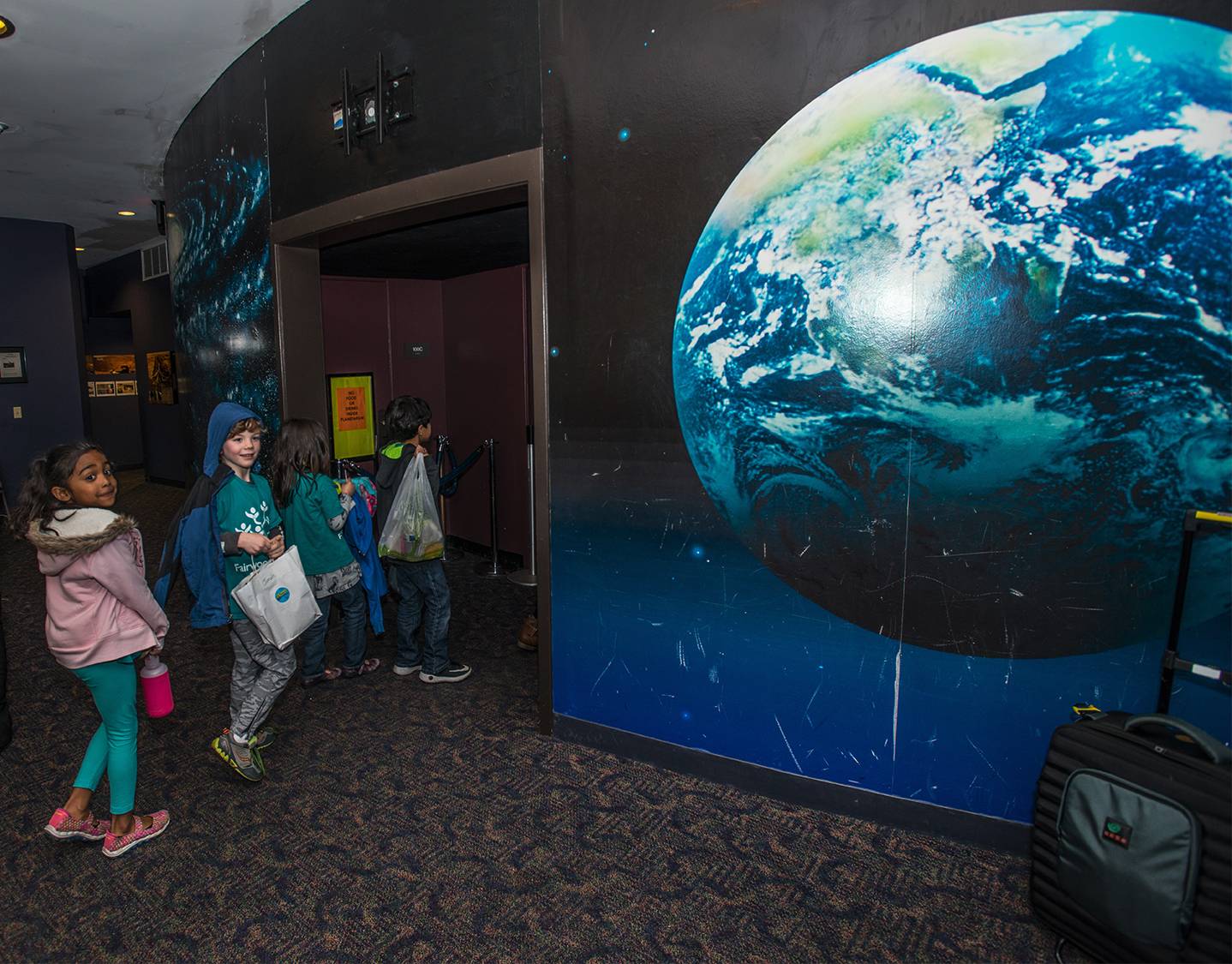
Do you have exhibits? Because we have rather small lobby, there are no exhibits like you might find at a science center. A larger lobby and exhibit area are on our wish list. It could have your name on it!
Is there an age limit for the planetarium? We do not set an age limit for children to visit the planetarium. We rely on parents to use their discretion whether a child will be comfortable. It is possible, but not encouraged, for people to leave and re-enter the theater during the show if necessary.
The seat backs are so high, how can small kids see? Our seats are designed for the audience members to see the dome projection screen overhead, not the front of the room. The college astronomy students have to adapt to this and not fall asleep!
Do you accept credit cards? Yes. Visa, MasterCard and Discover
Do you have a gift shop? Yes we do!
Where are the plants? This is a Planetarium not a plant-itarium! Unfortunately, we don’t have planets either. But we can visit them and show you where to look for them in the real sky.